Wenn Sie mit dem Diamond Painting beginnen, ist es leicht, gleichzeitig begeistert und überfordert zu sein.
Das Funkeln, die Muster und die unendlichen Auswahlmöglichkeiten ziehen Sie schnell in ihren Bann – aber es sind die kleinen Details, die Ihr Erlebnis ausmachen oder zerstören können.
Sie lernen, wie Sie die richtigen Werkzeuge auswählen, Ihre Materialien organisieren und einen Arbeitsplatz einrichten, der Sie motiviert, anstatt Sie zu stressen.
Einfache Gewohnheiten, wie das Beschriften von Bohrkronen oder die Wahl der richtigen Leinwandgröße, helfen Ihren Projekten, sauberer auszusehen und weniger Aufwand für die Fertigstellung zu erfordern.
Die Grundlagen des Diamond Painting verstehen

Diamond Painting verbindet die Entspannung des Kreuzstichs mit dem Glanz der Mosaikkunst. Sie platzieren winzige Harz-„Diamanten“ auf einer codierten Leinwand und erzeugen so Bilder, die unter Licht glänzen.
Zu wissen, wie es funktioniert, wie man das Diagramm liest und welche Schritte Sie von Anfang bis Ende unternehmen, hilft Ihnen, den Prozess zu genießen, anstatt sich verloren zu fühlen.
Was Diamond Painting beinhaltet
Beim Diamond Painting werden eine bedruckte Leinwand, farbige Harzbohrer, ein Stift, eine Ablage und ein Wachspad verwendet. Sie drücken jeden kleinen Diamanten auf klebrige Bereiche der Leinwand, die dem Symbol in diesem Rasterfeld entsprechen.
Leinwände gibt es mit runden oder quadratischen Bohrkronen. Runde Bohrkronen lassen sich schneller platzieren und sind oft besser für Anfänger geeignet, da sie keine perfekte Ausrichtung erfordern. Quadratische Bohrkronen passen eng zusammen und ergeben ein glattes, detailliertes Aussehen.
Beachten Sie die Legende an der Seite – sie listet jedes Symbol, jeden Farbcode (normalerweise eine DMC-Nummer) und jede Diamantbeutelnummer auf.
Halten Sie Ihre Werkzeuge organisiert. Verwenden Sie kleine Behälter oder Beutel mit Etiketten, um ähnliche Farbtöne zu verfolgen.
Viele Bastler finden, dass das Gruppieren von Farben in numerischer Reihenfolge Projekte beschleunigt und den Arbeitsplatz sauberer hält.
Muster und Legende sorgfältig lesen
Bevor Sie beginnen, studieren Sie das Muster wie eine Karte. Die Leinwand hat ein Raster aus Symbolen, wobei jedes Symbol für eine bestimmte Perlenfarbe steht. Die Legende oder Tabelle ist Ihr Schlüssel zur Entschlüsselung.
Hier ist ein einfaches Beispiel:
|
Symbol |
Farbcode |
Bohrerfarbe |
|
★ |
310 |
Schwarz |
|
□ |
742 |
Leuchtendes Orange |
|
△ |
907 |
Limettengrün |
Überprüfen Sie, ob der Code jedes Beutels mit dem in der Legende gedruckten übereinstimmt, bevor Sie Bohrer anbringen. Ein einfacher Fehler hier kann einen Teil des Bildes ruinieren.
Verwenden Sie einen Textmarker, um fertige Bereiche auf gedruckten Legenden zu markieren. Für größere Designs teilen Sie die abziehbare Plastikabdeckung mit Klebeband in Abschnitte, sodass Sie immer nur an kleinen Quadraten arbeiten.
Organisation spart Zeit und vermeidet Farbverwechslungen.
Den Prozess im Voraus kennen
Verstehen Sie den Arbeitsablauf, bevor Sie beginnen, damit Sie Ihren Raum und Ihre Zeit sinnvoll einteilen können. Sie beginnen damit, die Leinwand zu glätten, die Bohrer zu sortieren und die Werkzeuge vorzubereiten.
Verwenden Sie den Stift mit einem Tupfer Wachs, um jede Perle aufzunehmen und auf die Klebefläche zu legen. Arbeiten Sie von der oberen Ecke nach unten, wenn Sie Rechtshänder sind, oder von der gegenüberliegenden Seite, wenn Sie Linkshänder sind, damit Ihr Arm nicht am Kleber klebt.
Wenn Sie einen Abschnitt fertiggestellt haben, drücken Sie leicht mit einer Rolle oder einem Buch, um die Bohrer zu fixieren. Diamond Painting, manchmal auch als Malen mit Diamanten oder Diamantkunst bezeichnet, ist nicht schnell – es ist stetig.
Planen Sie Pausen ein, lagern Sie Ihre Leinwand flach und decken Sie sie wieder ab, um Staub fernzuhalten.
Die Wahl der richtigen Werkzeuge macht den Unterschied

Die Werkzeuge, die Sie verwenden, bestimmen, wie reibungslos Ihre Diamond Painting Projekte ablaufen und wie Ihr fertiges Werk aussieht. Ein paar kluge Entscheidungen können Ihren Arbeitsbereich komfortabler und Ihre Ergebnisse präziser machen.
In hochwertige Werkzeuge investieren
Hochwertige Werkzeuge helfen Ihnen, Diamanten genauer und mit weniger Frustration zu platzieren. Ein zuverlässiges Diamantenapplikator-Werkzeug nimmt zum Beispiel Bohrer sauber auf und gibt sie ab, ohne sie fallen zu lassen oder Rückstände zu hinterlassen.
Billige Versionen verlieren oft den Halt oder verbiegen sich, was Sie verlangsamt. Sie sollten auch ein Lichtpad suchen, das Ihre Leinwand gleichmäßig aufhellt.
Gutes Licht hilft Ihnen, Symbole klar zu sehen und beugt Augenbelastung vor. Ein stabiler Aufbewahrungsbehälter hält die Bohrer nach Farben sortiert und spart Zeit beim Wechseln zwischen Farbtönen.
|
Werkzeug |
Warum es wichtig ist |
|
Lichtpad |
Verbessert die Sichtbarkeit und reduziert Fehler |
|
Diamantenapplikator |
Erhöht Geschwindigkeit und Präzision |
|
Aufbewahrungsbox |
Hält Bohrer organisiert und griffbereit |
Eine kleine Anfangsinvestition in langlebige Werkzeuge bedeutet, dass Sie weniger oft Gegenstände ersetzen und mehr Zeit damit verbringen, das zu tun, was Sie genießen – mühelos zu malen.
Vorteile ergonomischer Diamantstifte
Ergonomische Diamantstifte reduzieren die Belastung von Fingern und Handgelenken, besonders bei langen Sitzungen. Im Gegensatz zu dünnen Plastikstiften unterstützen gepolsterte Griffe oder weiche Griffe die natürliche Form Ihrer Hand. Dieses Design fördert einen entspannten Halt und eine stabilere Platzierung.
Wenn Sie häufig an großen Leinwänden arbeiten, kann ein Multi-Diamantenapplikator hilfreich sein. Er ermöglicht es Ihnen, mehrere Bohrer gleichzeitig aufzunehmen und Reihen schneller abzudecken, ohne starken Druck auf Ihre Finger auszuüben.
Viele Bastler finden, dass der Wechsel zwischen Einzel- und Multi-Placern ihnen Flexibilität für detaillierte und große Bereiche gleichermaßen bietet.
Die Wahl von Stiften mit verstellbaren Spitzen oder austauschbaren Köpfen erhöht den Wert. Sie können den Stift an Ihren Stil anpassen, anstatt Ihre Hand zu zwingen, zum Werkzeug zu passen.
Wie die richtigen Werkzeuge den Prozess verbessern
Geeignete Werkzeuge rationalisieren die Einrichtung, helfen Ihnen, organisiert zu bleiben, und führen zu konsistenteren Ergebnissen. Die Verwendung eines Wachspads, das zu Ihrem Applikator passt, stellt sicher, dass jeder Bohrer korrekt haftet.
Pinzetten helfen Ihnen, falsch platzierte Diamanten zu korrigieren, ohne die Leinwand zu beschädigen. Ein hochwertiges Lichtpad in Verbindung mit einer klaren Beschriftung beschleunigt die Farbabstimmung.
Starkes Wachs und gerade, feste Applikatoren bedeuten weniger Fehler und weniger Nacharbeit. Sie verbringen weniger Zeit damit, falsch ausgerichtete Reihen zu korrigieren, und mehr Zeit damit, Ihr Design entstehen zu sehen.
Lesen Sie auch: 10 personalisierte Diamond Painting Ideen für Erwachsene
Die Organisation Ihrer Diamanten ist entscheidend

Die ordentliche Aufbewahrung Ihrer Diamanten spart Zeit, beugt Frustration vor und schützt Ihr Projekt. Bei so vielen Farben, Formen und Größen macht eine kleine Planung den gesamten Prozess reibungsloser und angenehmer.
Eine ordnungsgemäße Organisation hilft Ihnen auch, fehlende Bohrer zu erkennen, bevor Sie einen neuen Bereich beginnen.
Umgang mit mehreren Farben und Bohrern
Sie werden mit Dutzenden von Farbtönen arbeiten, und einige können fast identisch aussehen. Beginnen Sie mit der Trennung von runden und quadratischen Bohrern, da sie unterschiedliche Formen haben und unterschiedlich auf die Leinwand passen.
Runde Bohrer lassen sich leichter platzieren, können aber wegrollen, während quadratische Bohrer sauber zusammenklicken und ein saubereres Finish ergeben. Verwenden Sie kleine Behälter oder wiederverschließbare Beutel, um die Farben sortiert zu halten.
Bastelgeschäfte verkaufen Aufbewahrungsboxen mit Fächern, in die beschriftete Fläschchen passen, die sich hervorragend für größere Projekte eignen.
Eine Farbkarte oder ein auf dem Deckel befestigter gedruckter Schlüssel hilft Ihnen, sich zu merken, wohin jeder Farbton gehört. Wenn Sie an mehreren Gemälden arbeiten, beschriften Sie jeden Diamantensatz mit dem Projektnamen, um Verwechslungen zu vermeiden.
Halten Sie eine kleine Ablage oder ein Boot für Ihre aktiven Farben bereit. Legen Sie zusätzliche Bohrer in ihren Behälter zurück, bevor Sie zu einem neuen Farbton wechseln, um Kreuzkontaminationen zu vermeiden.
Diamanten sortieren und beschriften
Das Sortieren und Beschriften von Diamanten direkt nach dem Auspacken spart später Stunden. Gruppieren Sie Bohrer nach DMC-Nummer, Farbe und Größe.
Viele Bastler bevorzugen kleine Gläser oder Zip-Beutel, die entweder nach Nummern oder nach Farbfamilien geordnet sind. Erstellen Sie klare, gut lesbare Etiketten. Geben Sie die Farbnummer, das Symbol von der Leinwand und ob es sich um quadratische oder runde Bohrer handelt, an. Markieren Sie dauerhaft oder verwenden Sie vorgedruckte Aufkleber für beste Ergebnisse.
Wenn Sie runde Behälter verwenden, stellen Sie sie in einer Schublade oder auf einem flachen Tablett für einen schnellen Zugriff auf.
Bei Beutelsystemen lagern Sie diese aufrecht in einem kleinen Behälter oder einer Box. Sie können eine einfache Referenzkarte erstellen, die zeigt, wo jeder Beutel oder jedes Glas steht, um die Reinigung zu beschleunigen.
Fehler und verlorene Diamanten vermeiden
Das Verlieren von Bohrern ist häufig, aber leicht zu verhindern. Halten Sie immer eine Tablettmatte oder eine Fusselrolle bereit, um verirrte Diamanten aufzufangen.
Öffnen Sie nicht zu viele Behälter gleichzeitig, besonders bei ähnlichen Farben. Verschließen Sie die Behälter nach jeder Sitzung fest. Einige Bastler kleben ein kleines Stück Klebeband über den Deckel, um zusätzlichen Schutz zu gewährleisten. Halten Sie Ihren Arbeitsplatz trocken und flach, um zu verhindern, dass statische Aufladung die Bohrer an Werkzeugen kleben lässt oder aus den Tabletts springen lässt.
Bewahren Sie bei großen Projekten unbenutzte Diamanten in einer beschrifteten Box mit Deckel auf. Halten Sie ein kleines Ersatzbohrgefäß für lose Extras bereit – sortiert nach runder oder quadratischer Form –, damit Sie Ersatz haben, falls später ein paar verloren gehen.
Einen komfortablen Arbeitsplatz einrichten

Ein gut geplanter Arbeitsplatz sorgt für ein komfortables und effizientes Diamond Painting Erlebnis. Indem Sie sich auf Beleuchtung, Haltung und den Schutz des Arbeitsplatzes konzentrieren, können Sie längere Sitzungen genießen, ohne Belastung oder Frustration zu empfinden.
Die Bedeutung guter Beleuchtung
Die richtige Beleuchtung hilft Ihnen, die winzigen Harzbohrer klar zu sehen und jede Farbe dem richtigen Symbol zuzuordnen. Ein helles, gleichmäßiges Licht minimiert die Augenbelastung und verhindert Fehler, besonders bei der Arbeit in der Nacht oder in schwach beleuchteten Räumen.
Verwenden Sie ein Lichtpad unter Ihrer Leinwand, um Symbole von unten zu beleuchten. Viele Bastler finden dieses Werkzeug nützlich, um mit dunklen oder mehrfarbigen Hintergründen zu arbeiten.
Wählen Sie ein Lichtpad mit einstellbarer Helligkeit, damit Sie es auf ein angenehmes Niveau einstellen können, das keine Blendung verursacht. Sie können auch eine LED-Schreibtischlampe mit flexiblem Hals hinzufügen. Positionieren Sie sie so, dass Schatten auf Ihrem Arbeitsplatz reduziert werden.
Tageslichtlampen mit einem kühlen Weißton bieten eine klare, neutrale Farbe, die Ihren Augen hilft, feine Farbunterschiede zu erkennen.
Wenn Sie wenig Platz haben, können Klemmleuchten oder tragbare Ringlichter genauso gut funktionieren. Ziel ist eine weiche, gleichmäßige Beleuchtung, die Ihre Konzentration scharf hält, ohne Ihre Augen zu belasten.
Einen ergonomischen, aufgeräumten Arbeitsplatz schaffen
Eine ergonomische Einrichtung sorgt dafür, dass Ihr Körper während der Arbeit bequem bleibt. Ein stabiler, flacher Tisch in der richtigen Höhe macht einen großen Unterschied. Ihre Unterarme sollten bequem auf Tischhöhe aufliegen. Ihre Schultern sollten sich entspannt anfühlen.
Ziehen Sie einen verstellbaren Stuhl mit Rückenlehne in Betracht. Fügen Sie ein Kissen für eine bessere Haltung hinzu. Halten Sie den Bereich um Ihr Projekt herum frei von Unordnung. Bewahren Sie Bohrer, Tabletts und Werkzeuge in kleinen Schubladenorganisatoren oder beschrifteten Behältern auf.
Vertikale Regale oder ein Rollwagen helfen, Oberflächenplatz zu sparen. So haben Sie die Vorräte immer griffbereit.
Für kleinere Häuser oder Wohnungen sind klappbare oder tragbare Tische nützlich. Sie können überall aufbauen und danach alles wegräumen.
Matten oder Walzen verwenden
Eine rutschfeste Matte unter Ihrer Leinwand hält sie während der Arbeit stabil. Sie verhindert, dass die Leinwand verrutscht, und schützt Ihren Tisch vor Klebstoffrückständen.
Matten mit einer glatten, abwischbaren Oberfläche sind einfach zu reinigen und zu pflegen. Um Luftblasen oder Falten zu glätten, verwenden Sie eine Diamond Painting Walze.
Rollen Sie sie sanft über die Leinwand, um die Bohrer fest in den Klebstoff zu drücken. Drücken Sie nicht zu fest, da dies die Bohrer verschieben oder die Rückseite beschädigen kann.
Viele Bastler verwenden Bastelmatten mit Messrastern. Diese geben Ihnen eine visuelle Anleitung zum Ausrichten Ihrer Leinwand und zum Trimmen der Kanten.
Geduld und Zeitmanagement sind unerlässlich

Diamond Painting erfordert ständige Konzentration und Planung. Sie müssen Ihre Zeit so einteilen, dass Sie den Prozess genießen können, anstatt sich gehetzt zu fühlen. Sorgfältiges Arbeiten und geduldiges Vorgehen hilft dabei, dass jeder Abschnitt ordentlich ausgerichtet ist und gleichmäßig funkelt.
Diamond Painting ist zeitaufwendig
Selbst ein kleines Diamond Painting kann viele Stunden in Anspruch nehmen. Jedes winzige Steinchen oder „Bohrer“ muss von Hand platziert werden, was bedeutet, dass der Fortschritt langsam ist.
Viele neue Maler unterschätzen, wie lange ein Design dauern wird, insbesondere größere oder detaillierte Designs. Dieses Handwerk soll entspannend sein, nicht schnell.
Wenn Sie sich genug Zeit geben, können Sie sich auf eine saubere Platzierung und Farbgenauigkeit konzentrieren. Versuchen Sie, Ihren Fortschritt zu markieren, damit Sie motiviert bleiben – verfolgen Sie, wie lange es dauert, kleine Abschnitte fertigzustellen, oder zählen Sie die pro Sitzung platzierten Bohrer.
- Wählen Sie Leinwandgrößen, die zu Ihrem Zeitplan passen.
- Setzen Sie sich kleine Tagesziele anstelle langer Marathon-Sitzungen.
- Halten Sie Werkzeuge organisiert, damit Sie weniger Zeit mit der Suche nach Materialien verschwenden.
Projekte in überschaubare Sitzungen aufteilen
Das Aufteilen Ihres Projekts in kurze Sitzungen hilft Ihnen, konsequent zu bleiben und Ermüdung zu vermeiden. Stundenlanges Arbeiten ohne Pause kann Ihre Augen ermüden und Ihre Hände schmerzen lassen.
Planen Sie 30-60-minütige Sitzungen und feiern Sie den Abschluss bestimmter Bereiche, wie einen Farbblock oder einen Abschnittsgitter. Viele Bastler bedecken ihre Leinwand mit Schutzfolienabschnitten oder verwenden Washi-Tape, um sie in Quadrate zu unterteilen.
Dies hält Staub fern und gibt Ihnen klare Haltepunkte.
|
Verfügbare Zeit |
Vorgeschlagene Sitzung |
Hinweise |
|
30 Minuten |
Ein Raster fertigstellen |
Fokus auf Sauberkeit |
|
1 Stunde |
Zwei Raster oder ein kleiner Farbfleck |
Gleichmäßigen Rhythmus beibehalten |
|
Wochenende |
Ein großer Abschnitt |
Alle Stunde Pausen planen |
Eile vermeiden für beste Ergebnisse
Eile führt zu schiefen Bohrern, ungleichmäßiger Textur und Lücken, die das endgültige Aussehen ruinieren. Fehler werden schwieriger zu beheben, da Klebeflächen mit der Zeit an Haftung verlieren.
Nehmen Sie sich Zeit, die Bohrer sanft anzudrücken und sie mit einer Rolle oder Stiftspitze gerade auszurichten. Wenn Sie feststellen, dass Sie schneller werden, halten Sie inne und erinnern Sie sich, warum Sie angefangen haben – um sich zu entspannen und etwas Schönes zu schaffen.
Sie können den Prozess ruhiger gestalten, indem Sie Ihren Arbeitsplatz ruhig halten, sanfte Musik hören und realistische Ziele setzen. Vermeiden Sie es, Ihr Tempo mit dem anderer zu vergleichen.
Jeder malt in einem anderen Tempo, und das ist völlig in Ordnung.
Häufige Fehler und wie man sie behebt

Diamond Painting kann knifflig werden, wenn Reihen verrutschen, Bohrer abspringen oder klebrige Oberflächen den Halt verlieren. Wenn Sie auf kleine Details achten und Ihren Arbeitsplatz sauber halten, kann der Prozess reibungsloser verlaufen.
Beispiele für häufige Fehler
Ein häufiges Problem ist das Platzieren von Diamanten auf schiefen Reihen. Selbst eine kleine Fehlausrichtung kann auffallen, sobald das Stück fertig ist.
Um dies zu verhindern, arbeiten Sie in kleinen Bereichen und verwenden Sie ein Lineal oder eine gerade Kante, um die Fliesen auszurichten. Ein weiterer Fehler ist das Berühren der Klebefläche mit den Fingern.
Öle von Ihrer Haut machen sie weniger klebrig und erschweren das Haften der Diamanten. Halten Sie das Trennpapier über unbenutzten Stellen, bis Sie bereit sind zu arbeiten.
Es ist auch leicht, die Kantenkontrolle zu vergessen. Ohne richtige Ränder kann Klebstoff Fusseln anziehen oder die Leinwand ausfransen.
Bringen Sie Washi-Tape entlang der Kanten an, um es zu schützen. Dies hält die Oberfläche sauber und hilft Ihnen, innerhalb klarer Arbeitsgrenzen zu bleiben.
|
Fehler |
Einfache Lösung |
|
Schiefe Reihen |
Lineal oder Multi-Placer-Werkzeug für gerade Linien verwenden |
|
Schmutziger Klebstoff |
Schutzfolie bis zum Gebrauch aufbewahren |
|
Klebrige Ränder |
Washi Tape um die Leinwandränder anbringen |
Entfernen und Neupositionieren von Diamanten
Falsch platzierte Diamanten kommen häufig vor, besonders wenn man schnell arbeitet. Verwenden Sie eine Pinzette, um den Diamanten vorsichtig anzuheben, anstatt ihn mit den Fingern zu entfernen.
Ziehen Sie nach oben, nicht zur Seite, um zu vermeiden, dass der Klebstoff oder die Leinwandfasern reißen. Wenn der Klebstoff nach mehrmaligem Anheben an Haftkraft verliert, drücken Sie einen neuen Bohrer leicht an Ort und Stelle.
Sie können Diamanten wieder befestigen, indem Sie einen winzigen Punkt Stoffkleber oder selbstklebende Knete hinzufügen. Lassen Sie es trocknen, bevor Sie fortfahren.
Wenn Sie bemerken, dass sich Muster verschieben, heben Sie nur ein paar Reihen gleichzeitig an, anstatt neu anzufangen. Drücken Sie sie mit einer Rolle wieder in die richtige Position, um sie gleichmäßig zu glätten.
Verwendung von Werkzeugen zur Fehlerbehebung
Gute Werkzeuge machen Korrekturarbeiten schneller und sauberer. Eine Diamant-Malroller glättet unebene Stellen und verbessert die Haftung, ohne die Diamanten zu beschädigen.
Üben Sie leichten Druck in geraden Bewegungen aus. Ein Wachsstift oder Stylus kann helfen, einzelne Diamanten, die nicht gut haften, wieder anzubringen oder neu auszurichten.
Halten Sie zusätzliches Wachs bereit, da es mit der Zeit an Haftkraft verliert. Ersetzen Sie es, sobald der Stift Diamanten nicht mehr leicht aufnimmt.
Für größere Anpassungen bewahren Sie kleine Pinzetten, Ersatzschalen und zusätzliches Trennpapier auf. Diese Gegenstände helfen Ihnen, klebrige Bereiche zu handhaben, unerwünschte Fusseln zu entfernen und Diamanten präzise neu zu positionieren. Wenn Sie Werkzeuge in der Nähe haben, können Sie Fehler beheben, sobald sie auftreten, damit Ihr fertiges Werk ordentlich und eben bleibt.
Lesen Sie auch: Was ist der Unterschied zwischen Diamantkunst und Diamantmalerei?
Letzte Handgriffe und Präsentation Ihres Kunstwerks
Sobald Ihr Diamantgemälde fertig ist, können Sie es schützen und auf eine Weise präsentieren, die es ordentlich und poliert aussehen lässt. Kleine zusätzliche Schritte – wie Versiegelung, Rahmung und richtige Lagerung – machen einen großen Unterschied, wie gut Ihr Kunstwerk hält und wie professionell es aussieht.
Versiegelung des fertigen Gemäldes
Das Versiegeln hält Ihre Diamanten an Ort und Stelle und hilft, Staub oder Feuchtigkeit daran zu hindern, den Glanz zu trüben. Nachdem Sie die Diamanten mit einer Rolle fest auf den Klebstoff gedrückt haben, tragen Sie eine dünne, gleichmäßige Schicht Versiegelung auf.
Sie können Pinsel- oder Sprühversiegelungen verwenden, aber stellen Sie sicher, dass diese klar, nicht vergilbend und sicher für Acrylfarben sind. Lassen Sie das Gemälde mindestens einen ganzen Tag flach trocknen.
Einmal versiegelt, verschieben sich die Diamanten nicht, und Sie können das Stück sicher handhaben oder rahmen. Vermeiden Sie die Verwendung von Klebstoffen, die eine klebrige Oberfläche hinterlassen; diese können Staub anziehen und den Glanz reduzieren.
Schneller Tipp: Testen Sie zuerst eine kleine Ecke, um zu prüfen, wie die Versiegelung mit Ihren Diamanten und der Leinwand reagiert.
Rahmen oder Montieren Ihres Werkes
Das Einrahmen verleiht Ihrem Diamantgemälde ein sauberes, fertiges Aussehen. Sie können einen traditionellen Rahmen mit Glas, eine gespannte Leinwand oder eine Montage auf einer Schaumstoffplatte verwenden, je nach Ihrem Stil und Budget.
Rahmen mit Passepartouts können ungleichmäßige Kanten verbergen, während offene Rahmen ohne Glas die Textur und den Glanz des Gemäldes bewahren. Wenn Sie es selbst montieren möchten, schneiden Sie die Kanten sauber und verwenden Sie doppelseitiges Klebeband oder Bastelkleber, um die Leinwand zu befestigen.
Das Spannen über einen Leinwandrahmen eignet sich gut für große oder auffällige Stücke.
|
Methode |
Aussehen |
Benötigte Werkzeuge |
|
Standardrahmen |
Formal |
Rahmen, Klebeband, Schere |
|
Leinwandspannung |
Modern |
Heftklammerpistole, Keilrahmenleisten |
|
Schaumstoffplatte |
Leicht |
Bastelmesser, Klebstoff |
Das Einrahmen schützt Ihr Gemälde auch vor Verbiegen oder Knittern, wenn Sie es ohne Glas aufhängen möchten.
Langfristige Erhaltung von Kunstwerken
Damit Ihr Diamantbild wie neu aussieht, lagern Sie es flach oder vorsichtig gerollt mit den Diamanten nach außen. Vermeiden Sie feuchte Bereiche oder direkte Sonneneinstrahlung, da beides den Klebstoff schwächen und die Farben verblassen lassen kann.
Wenn Sie Ihr Gemälde bewegen oder verschenken müssen, legen Sie ein Blatt Wachspapier oder Backpapier über die Oberfläche, um Kratzer zu vermeiden. Reinigen Sie es gelegentlich mit einem weichen, trockenen Tuch, um Staub zu entfernen.
Für die Langzeitlagerung verwenden Sie ein säurefreies Portfolio oder eine Schutzhülle. Halten Sie es von extremer Hitze oder Kälte fern.
Empfohlene Produkte zur Verbesserung Ihres Diamond Painting Erlebnisses
Mit den richtigen Werkzeugen wird das Diamond Painting einfacher, schneller und komfortabler. Gutes Zubehör hilft Ihnen, Diamanten präzise zu platzieren, Ihren Arbeitsbereich zu organisieren und Ihr fertiges Kunstwerk vor Beschädigungen zu schützen.
Elektrischer Diamond Painting Stift
Ein elektrischer Diamond Painting Stift ermöglicht es Ihnen, mehrere Diamanten schnell zu platzieren, mit weniger Belastung für Ihr Handgelenk und Ihre Finger. Er funktioniert durch sanfte Vibrationen oder eine motorisierte Spitze, um Diamanten aufzunehmen und präzise zu platzieren.
Sie können je nach Größe und Form Ihres Musters zwischen Einzel- und Mehrfachplatzierungsköpfen wechseln. Dieses Werkzeug ist besonders hilfreich für große Leinwände, bei denen Handermüdung den Fortschritt verlangsamen kann.
Die meisten Modelle werden über einen USB-Anschluss betrieben oder laufen mit Batterien, was die Verwendung überall einfach macht. Suchen Sie nach Stiften mit einstellbaren Geschwindigkeitseinstellungen und Komfortgriffen, damit Sie sowohl Geschwindigkeit als auch Genauigkeit steuern können.
Eine hochwertige Option wird mit zusätzlichen Spitzen, Ersatzwachsköpfen und einem Ladekabel geliefert. Das regelmäßige Reinigen der Spitze und die Verwendung von frischem Wachs verbessern die Haftung der Diamanten und verhindern ein Abrutschen.
Diamond Painting Aufbewahrungsbehälter & Schalen
Organisiertes Aufbewahren der Diamanten vermeidet Verschütten und Farbverwechslungen. Diamond Painting Aufbewahrungsbehälter und Sortierschalen helfen Ihnen, Perlen nach Farbe, Größe oder Nummer zu verwalten.
Wählen Sie ein Behälterset mit dicht schließenden Deckeln, damit sich die Diamanten beim Umkippen nicht verstreuen. Viele Bastler bevorzugen Boxen mit transparenten Fächern und bedruckten Etiketten für eine einfache Referenz beim Farbwechsel.
Stapelbare Schalen sparen Platz und ermöglichen es Ihnen, an mehreren Farben gleichzeitig zu arbeiten, ohne den Tisch zu überladen. Unten finden Sie einen kurzen Vergleich gängiger Behältertypen:
|
Typ |
Am besten geeignet für |
Hauptmerkmal |
|
Kleine Gläser |
Häufiges Wechseln |
Nachfüllbar und tragbar |
|
Große Behälter |
Massenlagerung |
Fasst vollständige Bohrerpakete |
|
Stapelbare Schalen |
Aktive Projekte |
Einfacher Farbzugriff |
Bleiben Sie bei einem einheitlichen Beschriftungsstil, damit Sie jederzeit schnell die richtigen Diamanten finden können.
Diamond Painting Holzroller
Ein Holzroller hilft, die Diamanten fest in die selbstklebende Leinwand zu drücken. Nach dem Fertigstellen von Abschnitten Ihres Kunstwerks sorgt ein sanftes Rollen über die Oberfläche dafür, dass jeder Diamant gleichmäßig haftet.
Dies verringert die Wahrscheinlichkeit, dass sich später lose Steine lösen. Holzroller sind haltbarer und stabiler als Kunststoffroller.
Ihre glatte Oberfläche hilft, den Druck gleichmäßig zu verteilen, ohne die Diamanten zu beschädigen. Einige Roller haben sogar ergonomische Griffe, um den Halt zu verbessern.
Verwenden Sie einen Roller, sobald jeder Bereich gefüllt ist und bevor Sie versiegeln. Halten Sie ihn sauber, indem Sie ihn nach jeder Sitzung mit einem trockenen Tuch abwischen.
Sie werden ein flacheres, glänzenderes Finish bemerken, besonders bei großen Diamond Painting Kits.
Blumen am Fenster Diamond Painting Kit

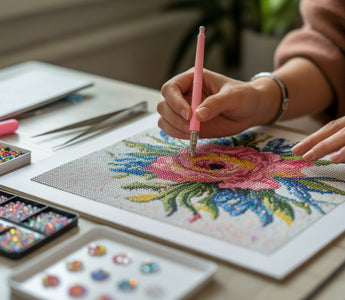
Das Blumen am Fenster Diamond Painting Kit kombiniert ein ruhiges Blumendesign mit einem detaillierten Hintergrund, der Schritt für Schritt gerne ausgefüllt wird. Dieses Kit enthält normalerweise eine vorgedruckte Leinwand, beschriftete Harzdiamanten, Wachspad, Applikatorstift und Schale – alles, was Sie für den sofortigen Start benötigen.
Die Mischung aus sanften Farben und klaren Gitterlinien macht es anfängerfreundlich und dennoch detailliert genug für erfahrene Maler. Sie üben das Mischen von Farben und lernen, wie Schattierungen die Tiefe beeinflussen.
Die robuste Leinwand behält ihre Form im Laufe der Zeit, und die Diamanten behalten einen hellen Glanz unter Licht. Wenn Sie Ihre Fähigkeiten stärken möchten, während Sie ein beruhigendes Bild erstellen, ist dieses Kit eine gute Wahl.
Zusammenfassung
Diamond Painting ist ein entspannendes und lohnendes Handwerk, aber das Wissen um wichtige Tipps im Voraus kann Zeit und Frustration ersparen. Von der Auswahl hochwertiger Kits und der Organisation der Diamanten bis zum Verständnis der besten Werkzeuge und der Arbeitsbeleuchtung ist Vorbereitung der Schlüssel.
Geduld und eine ordnungsgemäße Einrichtung des Arbeitsbereichs erhöhen den Genuss und die Ergebnisse. Vermeiden Sie häufige Fehler wie Eile oder Farbmischungen. Sind Sie bereit, Ihre Diamond Painting Reise mit Zuversicht zu beginnen?
Entdecken Sie die Caydo-Kollektionen für hochwertige Diamond Painting Kits und Zubehör, um glitzernde Meisterwerke mit Leichtigkeit zu kreieren!
Häufig gestellte Fragen
Wie wähle ich die richtige Leinwandgröße für mein Diamond Painting Projekt?
Wählen Sie Ihre Leinwandgröße danach, wie detailliert Ihr Design aussehen soll. Größere Leinwände zeigen mehr Details und reduzieren Unschärfen, während kleinere gut für einfachere Bilder geeignet sind.
Anfänger beginnen oft mit einem 30x40 cm oder kleineren Design, um sich an den Prozess zu gewöhnen, ohne überfordert zu sein. Stellen Sie sicher, dass Ihr Platz die Leinwand bequem aufnehmen kann.
Eine größere Leinwand erfordert mehr Zeit, Arbeitsbereich und Geduld.
Was sind die besten Strategien zum Organisieren und Aufbewahren von Diamanten?
Verwenden Sie beschriftete Behälter, Pillendosen oder wiederverschließbare Beutel, um Ihre Diamanten nach Farbe und Nummer sortiert zu halten. Durchsichtige Behälter erleichtern das Erkennen jedes Farbtons auf einen Blick.
Wenn Sie mitten im Projekt eine Pause einlegen, verschließen Sie offene Diamanten fest, um das Eindringen von Staub oder Feuchtigkeit zu verhindern. Einige Bastler lagern Schalen oder Diamanten auch auf einem Backblech oder einer Backunterlage, um Verschüttungen einzudämmen.
Gibt es unverzichtbare Werkzeuge, um mein Diamond Painting Erlebnis zu verbessern?
Ein Leuchttisch kann Ihnen helfen, Symbole klar zu sehen und die Augenbelastung zu reduzieren. Eine Multi-Placer-Stiftspitze ermöglicht es Ihnen, mehrere Diamanten gleichzeitig aufzunehmen, um Ihre Arbeit zu beschleunigen.
Pinzetten, Rollenwerkzeuge und Aufbewahrungsboxen können ebenfalls hilfreich sein, um alles ordentlich und ausgerichtet zu halten.
Welche häufigen Fehler sollte man beim Start mit Diamond Painting vermeiden?
Viele Anfänger ziehen die gesamte Plastikabdeckung auf einmal ab, was Staub anziehen und die klebrige Schicht austrocknen kann. Arbeiten Sie stattdessen in kleinen Abschnitten.
Übermäßiges Berühren des Klebebereichs oder zu starkes Drücken kann dazu führen, dass sich die Diamanten verschieben oder die Leinwand ihren Halt verliert. Überprüfen Sie auch die Diamantcodes sorgfältig, bevor Sie sie platzieren, um Farbverwechslungen zu vermeiden.
Wie kann ich verhindern, dass die Leinwand mit der Zeit ihre Klebkraft verliert?
Decken Sie unbenutzte Bereiche immer mit der Schutzfolie ab, wenn Sie nicht arbeiten. Dies hält Staub, Tierhaare und Luft fern, die dazu führen könnten, dass die Leinwand austrocknet und ihre Klebkraft verliert.
Wenn Sie eine verminderte Klebrigkeit bemerken, wischen Sie die Oberfläche vorsichtig mit einem Babytuch ab und lassen Sie sie trocknen, bevor Sie weitere Diamanten hinzufügen. Vermeiden Sie die Verwendung von Ölen oder Reinigungsmitteln, die den Klebstoff beschädigen könnten.
Können Sie Tipps zum Einrahmen und Ausstellen meines fertigen Diamond Painting Kunstwerks geben?
Glätten Sie Ihr fertiges Gemälde mit schweren Büchern oder einer Rolle, bevor Sie es einrahmen. Ein Glasrahmen schützt es vor Staub und lässt den Glanz sichtbar.
Wenn Sie kein Glas bevorzugen, sprühen Sie eine leichte Versiegelung über die Oberfläche, um die Diamanten an Ort und Stelle zu halten. Hängen Sie es an einem trockenen Ort ohne direkte Sonneneinstrahlung auf, um Verblassen oder Vergilben zu verhindern.